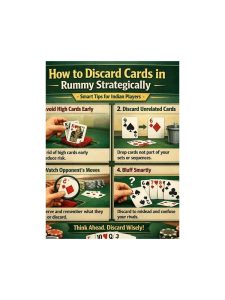
Rummy Comparison: Early Completion Versus Better Flexibility
Rummy players regularly face a choice between completing a modest group now and preserving a set of connected cards that could improve in several ways. Early completion feels safe because it provides visible progress. Flexibility feels uncertain because it is still only potential. Comparing the two requires looking at the whole hand rather than rewarding the most obvious local improvement.
First, identify what the early group actually solves. Does it satisfy a required pure sequence, reduce high-point exposure, or simply remove one pair from consideration? A completed group that meets an essential rule may deserve priority. A completed low-value set that leaves several disconnected cards may be less important than it appears.
Then examine the flexible cards. Count their natural neighbours and possible group types, but discount routes that need multiple exact draws. Two adjacent cards of the same suit may have several improvements; two matching face cards may have fewer. Flexibility is valuable only when the available routes are realistic and the cards do not create excessive competition elsewhere.
Timing changes the comparison. Early in a hand, keeping flexible links can be sensible because there is time to receive help. Late in a hand, a completed group may be worth more because a known result is safer than a broad possibility. The number of turns remaining, the visible cards, and the cost of holding loose cards should all influence the choice.
Use a simple test: after this move, which hand would be easier to explain two turns from now? If the early completion leaves a clear route and a low-risk discard, choose it. If it produces a tidy-looking group but strands expensive cards, preserve the flexible connection. Neither principle is universal. Good comparison means recognising when certainty reduces risk and when flexibility creates the best chance of finishing. It is also possible to preserve flexibility while completing a group. If the completed cards are not needed elsewhere, the move may offer both certainty and room. The comparison becomes difficult only when completion uses a connector or joker that supports another route. In that case, measure the value lost by removing the shared card before celebrating the visible group.
Review the decision after the discard rather than judging it by appearance. A flexible route that remains supported is still valuable, while a completed group may expose a new weakness. This follow-up matters because rummy hands evolve immediately after a move. Strong play is not about choosing the same category every time; it is about noticing which benefit the current hand needs most.