Rummy How-To: Review a Hand in Thirty Seconds
A thirty-second hand review is useful when a timer, crowded screen, or stressful turn makes long analysis unrealistic. The routine is not a shortcut around the rules. It is a way to check the highest-impact facts in a consistent order.
First, identify your strongest confirmed group. Say what it is and whether it satisfies a required pure sequence. This anchors the review in something real rather than in a hoped-for draw. If you do not have a confirmed foundation, mark that as the hand’s main risk.
Second, scan the remaining cards for direct connections. Separate cards that already have a partner from cards that need one exact rank or suit. Do not spend equal attention on every possibility. Give priority to the route with the fewest conditions and the greatest legal value.
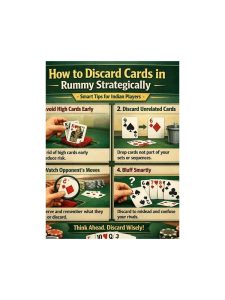
Third, choose the discard by comparing exit cost. A high, isolated, or duplicated card usually deserves attention. But a low card that blocks a nearly complete sequence may be the better release. Ask what you lose by discarding each candidate and what an opponent might gain from it.
Fourth, check the visible information. Has the card you need already appeared in the discard pile? Did another player pick up a card that changes your assumptions? You do not need to reconstruct the whole table. Notice only facts that can change your immediate choice.
Fifth, set a next-turn trigger. Decide what event would make you change plans: a new connector, a missing card becoming unavailable, or a route reaching a commitment point. This prevents the next turn from starting with the same vague uncertainty.
Practise the routine with harmless examples so it becomes automatic. On a small screen, use visual grouping and avoid switching between menus while the clock runs. If your attention is impaired or the session is no longer enjoyable, pause or stop. A fast review should create calm clarity, not pressure to continue. The purpose is to make one sound decision, then let the next card provide fresh information.
Practise with a physical timer only after you understand the routine without pressure. Start with a minute, then reduce the limit gradually if the format requires faster turns. If the shorter limit causes repeated rule errors, increase it again. Speed is useful only when it preserves decision quality. A calm thirty-second review is better than a rushed sequence of guesses.
If the clock expires, review the cause later instead of reacting angrily.