Rummy Tips: Read Your Own Discard History
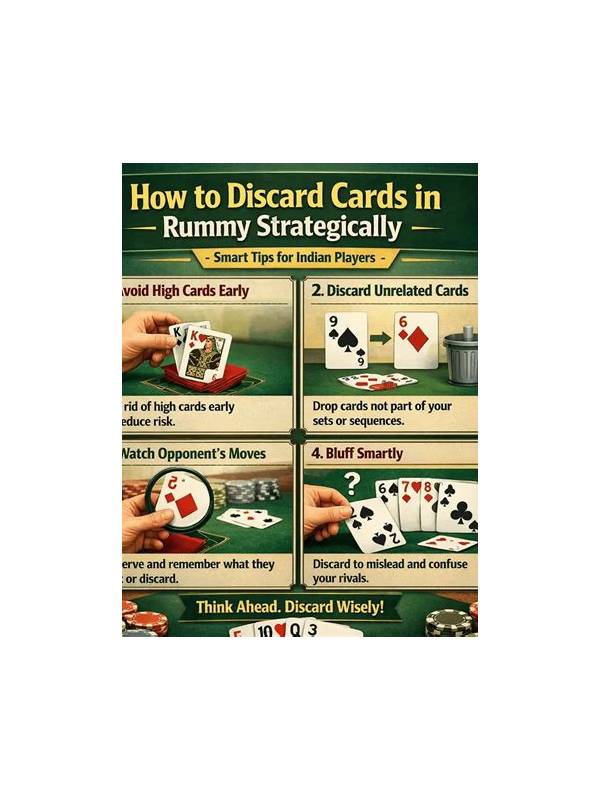
Players often study the visible discard pile and forget that their own discards form a useful record. A short review after a hand can show whether you release useful connectors too early, keep expensive cards too long, or change plans without noticing. The purpose is not to criticize every choice. It is to identify a pattern that can be tested in the next session.
Begin by writing down the order of your discards if the table or app provides a history. If not, remember the last few cards and note them immediately after the hand. Beside each card, write the role it had at the moment: isolated high card, duplicate, blocked connector, or deliberate safety release. Avoid labeling a decision as “bad” before considering what was visible then.
Look for repeated timing. Do you discard high cards only after drawing several replacements, even when they had no partner? That may indicate that point anxiety is being treated as a reason to delay every difficult choice. Do you release low cards that could connect to two ranks while keeping a single face card? That suggests you may be valuing immediate comfort over future flexibility.
Also inspect reversals. Perhaps you first separated a pair, then rebuilt it two turns later. Reversals are not automatically mistakes; a new draw can justify them. They are useful because they reveal where your plan was unclear. Mark whether the reversal came from new information or from frustration. That difference matters more than the reversal itself.
A simple review table has four columns: turn, discarded card, intended role, and what you learned later. The last column should describe information, not blame. For example, “the opponent quickly took a nearby rank” is evidence, while “I played terribly” is not. After three hands, count the most common issue and choose one experiment. If you often keep dead face cards, try giving each one a deadline based on the next two draws.
Keep the experiment narrow. Changing every habit at once makes it impossible to know what helped. Review again after five or six hands and compare decisions, not only results. A losing hand can contain a sound discard, while a winning hand can contain a lucky escape. Your discard history becomes valuable when it teaches you how you think under incomplete information.
You can make the review even more useful by noting what you did not discard. Sometimes the important habit is a repeated hold: a high card kept through several turns, or a joker reserved for a route that never developed. Add one sentence about the strongest alternative you considered. This keeps the record balanced and helps you see whether your choices were deliberate or simply inherited from the previous turn.