Rummy Guide: Use a Waiting-Card Budget
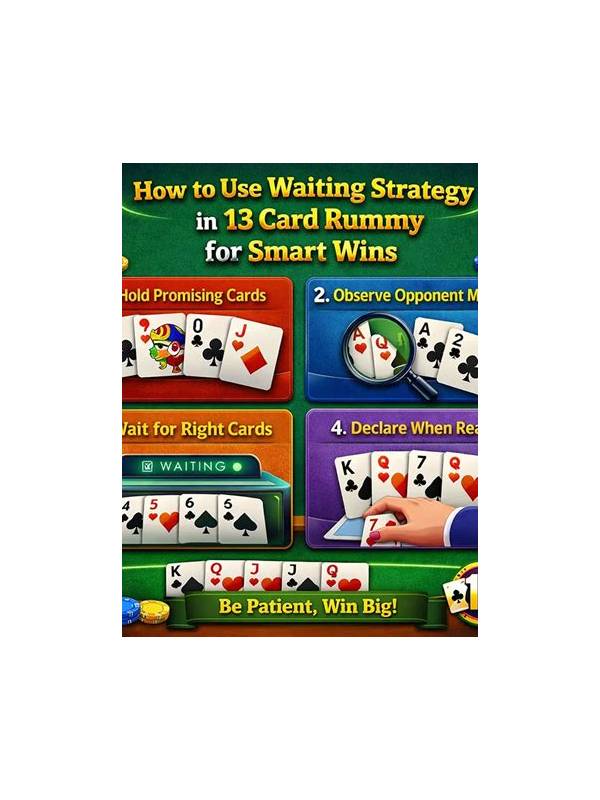
Many rummy hands contain cards that are waiting for help. One pair may need a matching rank, a connector may need a neighbor, and a high card may appear useful only because it could join a distant group. Holding all of these possibilities feels safe, but it can leave too little room for completed structure. A waiting-card budget provides a practical limit.
Begin by counting uncertain cards rather than counting groups. If six cards depend on very specific future draws, write that down mentally. Then ask how many of those cards support the same route. A pair and a connector that can share a completion may be one connected project. Two unrelated pairs are separate projects and compete for the same future draws.
Set a simple budget for the current hand, such as two uncertain projects. The exact number is less important than making the trade-off visible. If a new draw creates a third project, compare it with the weakest existing one before keeping it. Favor the project with more possible completions, lower point exposure, or a clearer role in a required sequence.
The budget should not be treated as a rule that overrides the cards. A nearly complete pure sequence may justify temporarily exceeding it. Likewise, a joker can make one project less expensive because it supplies flexibility. Record why you are making the exception. If you cannot explain the exception, it may be simple attachment to a promising-looking pattern.
Recount after each discard. A discard can reduce uncertainty by removing a dead card, but it can also break a route you were quietly depending on. Notice both effects. The aim is not to reduce every waiting card immediately; it is to keep the number of unresolved commitments within your ability to evaluate.
With practice, the budget becomes a fast question: “How many things am I asking the next draw to solve?” If the answer is too large, simplify. You may not improve the hand instantly, but you will make the next decision clearer and avoid carrying a collection of attractive possibilities that cannot all be completed.
The budget is also useful when deciding whether to take a card from the discard pile. Ask whether the pickup replaces an existing project or merely adds another one. If it adds another, identify the card that would leave immediately if the new route fails. Without that exit plan, the pickup can increase clutter rather than improve the hand. A clear budget keeps enthusiasm connected to a manageable commitment.