Rummy Guide: Read the Shape of a Hand Before Choosing a Plan
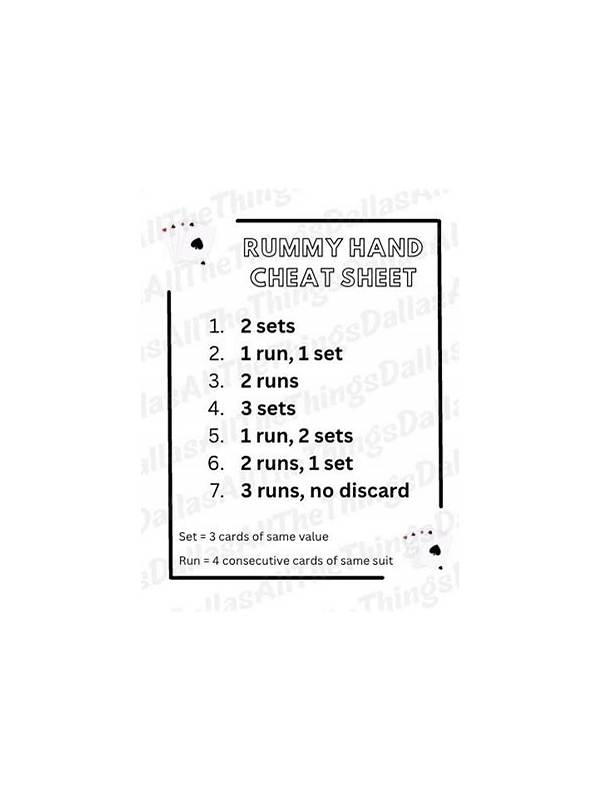
Many rummy decisions become easier when you describe the hand before trying to solve it. Instead of asking which card should be discarded immediately, first notice the hand’s shape. Is it already concentrated in one suit, split between several pairs, or filled with isolated high cards? This short classification creates a plan without pretending that every draw can be predicted.
Start by separating cards into three groups: confirmed groups, promising links, and loose cards. A confirmed group is a valid sequence or set you are comfortable protecting. A promising link contains cards that could join with more than one useful neighbor. Loose cards have no current relationship to the rest of the hand. This sorting is more helpful than simply arranging cards by suit because it shows where your decisions are actually concentrated.
Next, count the number of unfinished ideas. Two adjacent cards in one suit may be one idea. A matching pair is another. Three unrelated cards are not three ideas; they are usually three separate risks. If a hand contains too many unfinished ideas, choose the one with the clearest route and keep only one or two alternatives. A plan with fewer branches is easier to reassess after each draw.
The hand’s shape also tells you what kind of discard to seek. A hand with many high, unconnected cards needs value reduction. A hand with several flexible connectors may benefit from protecting flexibility for another turn. A hand with one nearly complete group and many loose cards should usually preserve the nearly complete group while testing the loose cards first. These are starting points, not automatic rules.
Reclassify after every meaningful draw. A card that looked loose can become a connector, while a once-promising pair can lose importance when its likely neighbors disappear. Ask three questions: what is complete, what is still flexible, and what has stopped improving? Writing those answers mentally takes only a few seconds and prevents attachment to an old plan.
The goal is not to forecast the exact winning hand. It is to make the current hand legible. Once its shape is clear, compare discards by risk, flexibility, and point value. That small pause turns a vague hand into a set of visible choices and makes later decisions calmer.