Rummy Guide: Map Open Ends Before Drawing
In a busy rummy hand, it is easy to describe every card as “useful.” That description is too broad to guide a decision. A better method is to map the open ends in your hand before you draw. An open end is a specific missing card or rank that could connect two cards, extend a run, or complete a set. The map does not predict the next card; it shows what your current plan actually needs.
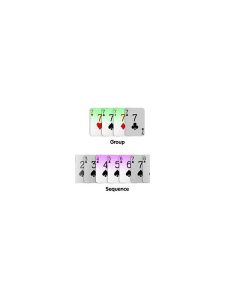
Start by arranging your cards by suit and rank. Mark any two-card same-suit run, such as 6-7 hearts, as one open-ended possibility because a 5 or 8 may help. Mark a one-gap structure, such as 5-7 hearts, separately because only the 6 helps immediately. Finally, mark repeated ranks across suits as possible set routes. Do not count a card twice without noting the conflict. A 7 of hearts may extend one run while also completing a set, but drawing it for one route prevents it from serving the other.
Next, separate open ends into strong and weak. A strong open end has more than one useful card or supports a required sequence. A weak open end depends on one narrow card, especially when the same card would be valuable to an opponent. This distinction keeps a tempting near-run from receiving the same attention as a reliable structure. If your hand has two strong routes and one weak route, the weak route is usually the first candidate to release.
Update the map after every draw and discard. A card that looked useful before the draw may become redundant once another connection appears. Likewise, a discarded card can provide information: if you release a card that served a weak route, your remaining open ends become easier to evaluate. Avoid keeping a route merely because you have already invested turns in it. The map should describe the present hand, not defend an old decision.
This technique is most useful when the hand feels crowded. It turns vague optimism into a short list of concrete needs. Before choosing between the stock and discard pile, ask which option improves a strong open end, whether it creates a new dependency, and what you can safely discard afterward. You may still draw an unhelpful card, but your decision will be based on visible structure rather than a feeling that every possibility is alive.