Rummy Tips: Ask One Question Before Every Discard
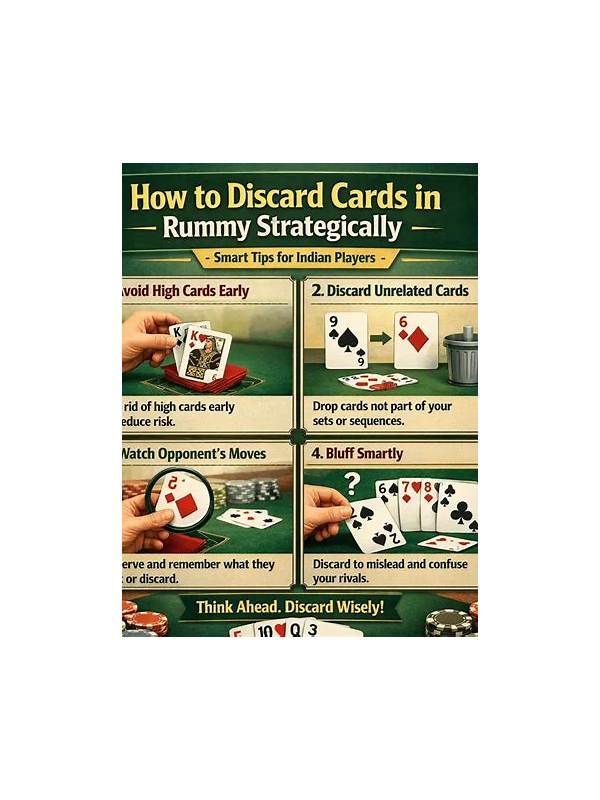
Fast play often creates a familiar mistake: a card is discarded because it looks awkward, not because its alternatives have been compared. A single question before every discard can interrupt that reflex. The question is, “What useful work could this card still do if I keep it for one more turn?”
The question does not mean every card deserves to be protected. It asks you to identify the card’s possible jobs. A middle card may connect to two neighboring ranks. A duplicate may support a set. A high card may be a clear point-saving discard even if it has a theoretical use. A joker or wild card may have several jobs, but keeping it is sensible only when those jobs fit a credible plan.
After identifying the possible work, compare it with the cost of keeping the card. Does it block a cleaner hand arrangement? Does it force you to discard a more valuable card? Does it depend on a card that has already appeared? Does keeping it make your next decision harder? These follow-up checks should stay brief. The aim is to improve attention, not create a long internal debate on every turn.
You can vary the question when the hand changes. Early in a round, ask what the card could connect to. Near the end, ask whether it belongs in a complete declaration. When the discard pile is informative, ask whether keeping the card reveals a useful pattern about what others may want. When you feel rushed, ask which discard leaves the clearest next step.
A useful practice exercise is to pause before three random discards in a free or low-pressure session. State the card’s possible jobs, then state why one job is outweighed by the cost of keeping it. Do not try to make the perfect choice. Train the habit of explaining the choice in plain language. If your explanation relies on “it feels lucky,” record that as uncertainty rather than hiding it.
This method also helps with review. After a hand, choose one discard and answer the question again using the information that was available at the time. Avoid judging the choice from the final result alone. A disciplined question produces better process even when the draw does not cooperate. Over time, a small pause can reduce automatic decisions and make your overall strategy easier to inspect.
The habit works best when the question remains neutral. It should not be a disguised instruction to keep the card. Sometimes the answer is that the card has one remote use, but the hand needs a clean discard now. Naming both facts lets you choose deliberately and makes later feedback more useful.