
Rummy FAQ: What Does a Safe Discard Mean?
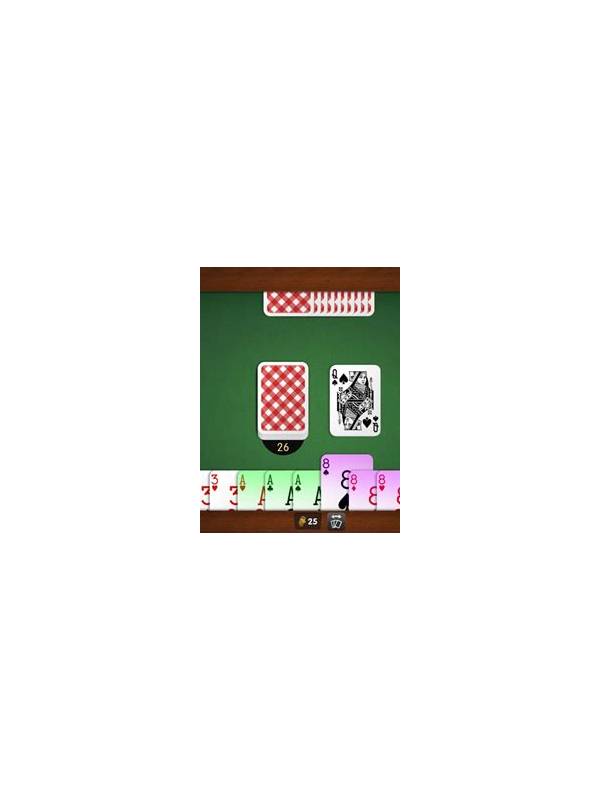
A safe discard in rummy is a card that appears less likely to help an opponent, based on the information currently available. It is never completely safe unless the rules or revealed cards make use impossible. Treating safety as a probability keeps the decision realistic and prevents overconfidence.
Start with the discard pile. If an opponent has already rejected cards close in rank and suit to your candidate, that is some evidence they may not be collecting that area. The evidence is stronger when several related cards have been discarded by the same player. It is weaker when only one card has appeared, because players can change plans or discard a temporary duplicate.
Then consider exposed groups and visible needs. A card that completes a clearly displayed sequence may be dangerous to release. A card adjacent to a known pair can also be useful, even if the exact target is hidden. Watch for patterns without assuming you know the opponent’s full hand. Your aim is to rank risks, not to solve the entire table.
The card’s point value matters too. When two discards have similar likelihood of helping someone, releasing the higher-value unmatched card usually reduces your potential loss. This is a practical form of risk control, but it should not override a necessary defensive discard. A low-value card that completes an opponent’s likely group may be more dangerous than a high card with no visible connection.
Timing changes the answer. Early in the hand, players have more room to collect cards, so almost any connected card may carry some risk. Late in the hand, a player who is close to declaring may need a very specific connector. If the discard pile shows that an opponent is narrowing a plan, avoid feeding that plan when another reasonable discard exists.
A useful ranking method is to score each candidate informally on three dimensions: visible fit for an opponent, point cost if retained, and effect on your own future options. Choose the discard with the lowest combined danger, not automatically the oldest or highest card. If every option is risky, choose the card that preserves your best arrangement and accept that uncertainty is part of the game.
Remember that deliberate misdirection has limits. Discarding a card merely to confuse opponents can leave your own hand weaker. Make your primary decision around legal completion and efficient hand management, then use table information as a tiebreaker. Also avoid reading too much into one opponent’s draw. A card may be taken for a defensive reason or as a temporary bridge.
In short, a safe discard is a reasoned estimate. Review the visible cards, compare likely connections, account for points and timing, and keep your own hand flexible. This process will not eliminate surprises, but it will make defensive discards more consistent and easier to evaluate afterward.


