
Rummy Comparison: One-Deck and Multiple-Deck Planning
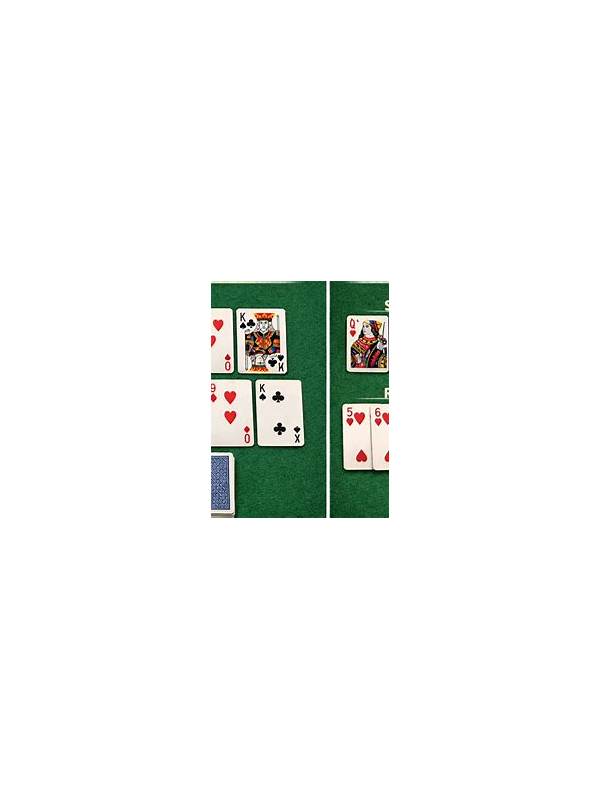
Single-deck and multi-deck rummy can share the same broad objective, but the information environment is different. With one deck, a visible card may sharply reduce the chance of seeing another copy. With multiple decks, the same observation is weaker. Planning must account for that difference.
In a single-deck format, duplicate ranks across suits are limited by the deck. If several cards of one rank are visible, a set route may be nearly closed. This makes careful observation valuable. A discarded card can remove a specific possibility, and holding a card that depends on one unseen copy may become risky quickly.
In a multi-deck format, duplicates are more common. A set may remain plausible after copies appear, but the extra uncertainty also makes it harder to infer what other players want. You may see a card discarded more than once without knowing whether the next copy is useful to someone else. Use public information as a guide, not as a guarantee.
The best sorting habit also changes. In a single deck, list visible blockers when evaluating a narrow route. In a multi-deck game, emphasize your own hand structure and the number of alternative routes. Flexible combinations can be more valuable because the table gives less reliable information. Avoid treating a repeated card as automatically dead or automatically safe.
Discard risk differs as well. In a single deck, discarding a card that completes an obvious sequence may give another player a rare opportunity. In a multi-deck game, the same discard may be less informative, but it can still help if another copy is available. Watch patterns over several turns rather than reacting to one pickup.
The difference also affects confidence. In a single deck, a careful count can sometimes make a route clearly unattractive. In a multiple-deck game, the same count may only lower confidence slightly. Keep your language precise: say that a route is less supported, not impossible. This wording encourages review when a new card appears and prevents a single observation from becoming an inflexible rule.
Before starting, confirm the exact rules: deck count, hand size, joker treatment, and declaration requirements. A strategy copied from another format may fail because the underlying probabilities are different. Practice each format separately and review which observations were dependable. The comparison is not about declaring one format easier; it is about matching your reasoning to the number of possible copies in play.


