Rummy Tips: Use Discard Symmetry to Compare Two Exits
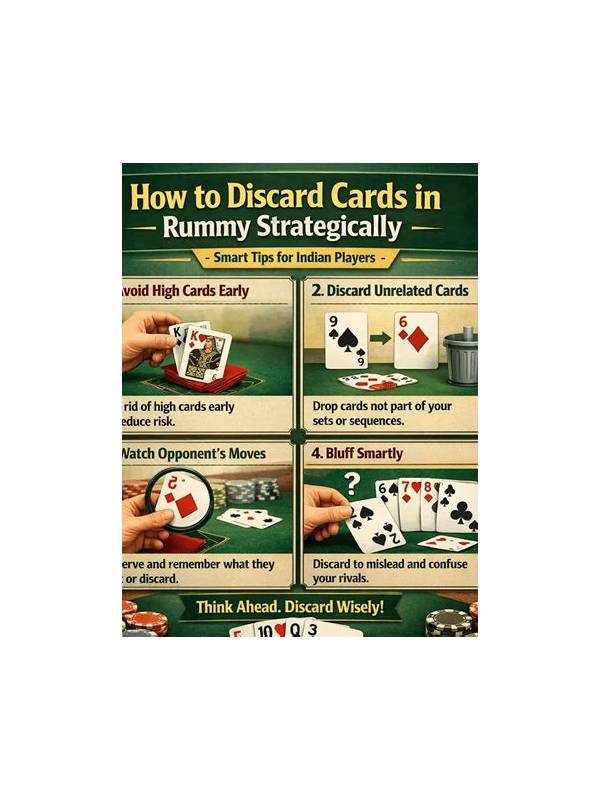
When two cards look equally disposable, a quick symmetry test can make the choice clearer. The test does not mean the cards are identical. It means you compare them using the same questions instead of following whichever card feels less important in the moment.
For each candidate, describe its current job. A card may belong to a confirmed group, support a waiting sequence, duplicate another card, or have no credible connection. Then note its best alternative job. A card with one weak route and a card with two moderate routes are not symmetrical, even if both are currently unmelded. This first pass prevents you from comparing only point values.
The second question is what the discard preserves. Removing one card may leave a clean pair and a flexible connector. Removing the other may break a group that could be completed with several draws. Look at the shape left behind, not just the card leaving your hand. A tidy remainder is often easier to reassess than a collection of attractive but overlapping fragments.
The third question is what the discard reveals. A visible discard can become information for other players, although its meaning is uncertain. More importantly, it reveals your own commitment to you: after discarding a connector, you should stop counting that route as available. This mental clarity has value. A discard that removes an unproductive illusion can be better than one that leaves every possibility technically open.
Finally, compare recovery. If the discarded card turns out to have been useful, which choice is easier to repair? A single missing connector may be recoverable. Breaking a nearly legal group may create several new gaps. Give each candidate a recovery label such as easy, moderate, or expensive. This is more useful than pretending you can calculate the exact future.
You can summarize the test in four lines: current job, remainder, information effect, and recovery cost. Apply the same four lines to both candidates. If one card is clearly worse on three lines, the decision is usually robust. If the comparison remains close, choose the discard that leaves the simplest next-turn question and move on.
Discard symmetry is a decision aid, not a guarantee. It helps you make a fair comparison when the hand is crowded, while preserving room to adapt when new evidence appears.
If the two exits remain equal after the test, use a stable tie-breaker. Favor the choice that lowers immediate points, keeps a confirmed group intact, or leaves an easier next-turn question, in that order only when the first factor is genuinely close. A repeatable tie-breaker prevents a small decision from consuming the rest of the turn.