Comparing Rummy Practice Modes Before Real Tables
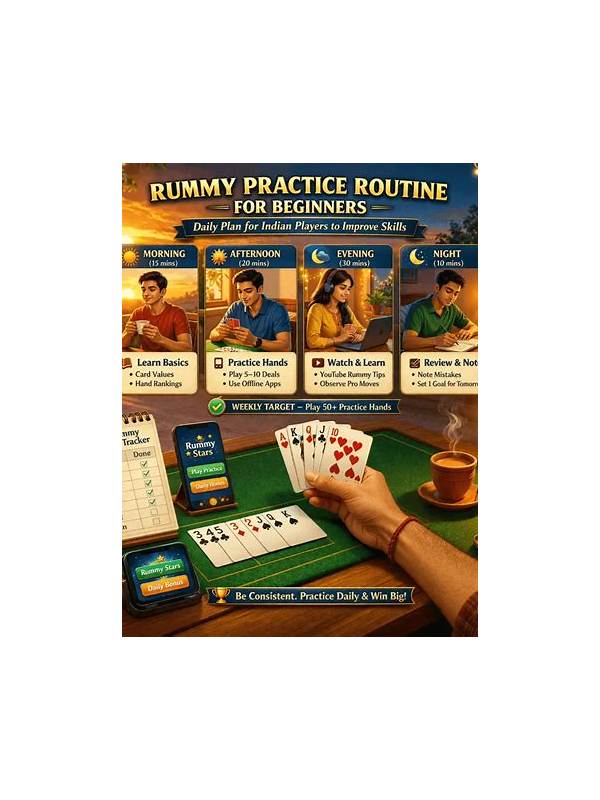
Not every practice mode teaches the same skill. A tutorial may explain rules, a puzzle may test combinations, and a free table may reproduce the pace of a live hand. Comparing these modes helps you choose an exercise that matches what you want to improve.
Use a tutorial when the problem is terminology or rules. Focus on the definition of a pure sequence, set, joker, declaration, and scoring event. Repeat the explanation in your own words. If you cannot describe the winning arrangement clearly, strategy practice will be less useful.
Use puzzles for pattern recognition. They are good for asking whether a group is legal or which card can be assigned to which structure. Their weakness is that the answer is often visible and the time pressure is limited. Treat puzzle success as a foundation, not proof that a live table will feel easy.
Use a free or low-pressure table to practise process. Sort the hand, identify a plan, watch the discard pile, and review before declaring. Pay attention to timing and interface controls. The goal is to perform the same steps consistently, not to chase an impressive result.
When comparing modes, measure feedback quality. Does the mode explain an error, or does it simply show that you lost? Does it use the format you expect to play? Can you stop and review without feeling rushed? A mode that answers these questions may be more valuable than one with attractive graphics.
Keep the practice boundary clear. Do not move to higher stakes merely because a short exercise went well. Set a time limit, take notes on one skill, and stop when the lesson is complete. Practice works when it builds repeatable habits and rule confidence; it is not a reason to extend play or increase spending.
You can rotate modes across different days: rules first, pattern puzzles next, and a short low-pressure table later. Keep the learning objective visible so a win does not become the only measure of progress. For example, a session may be successful if you correctly check every declaration, even when the final score is ordinary. Stop once the objective has been tested enough to review. A clear endpoint makes practice more sustainable and keeps it separate from competitive pressure. When feedback is vague, create your own review question: was the rule misunderstood, was the plan too narrow, or was the result simply uncertain? This keeps practice constructive. Finish by writing one sentence about the next skill to test, then close the mode and take the planned break.