Rummy How-To: Use a Simple Risk Ladder for Unfinished Melds
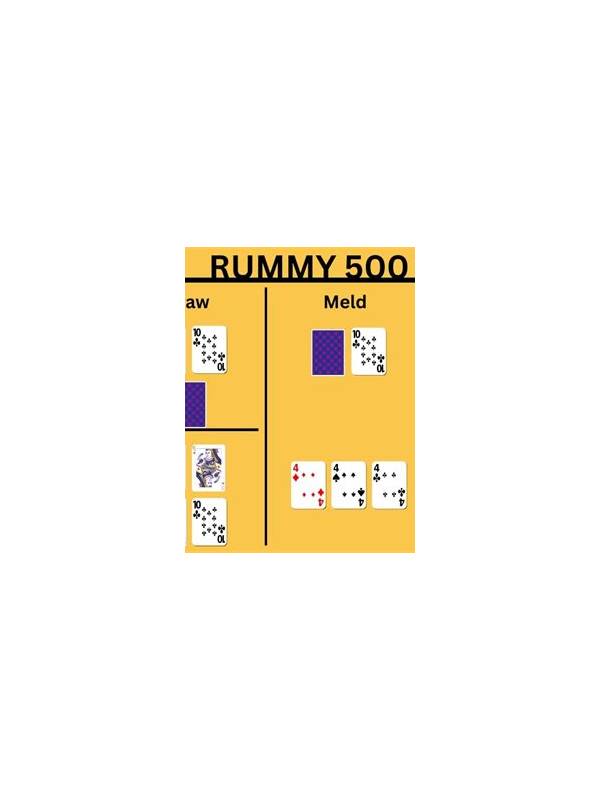
When several melds are unfinished, it is easy to draw without a plan. A simple risk ladder gives each idea a place: strong, moderate, or weak. The ladder is not a prediction of exact odds. It is a way to compare how much support a combination has and how costly it will be if it never forms.
Place a meld in the strong category when it needs one card and has multiple realistic outs. A five-six of hearts, for instance, has a straightforward need, while nearby cards may also preserve an alternate arrangement. Moderate plans need one card but depend on a narrower suit or rank relationship, or they compete with a better use for the same card. Weak plans are pairs or isolated cards with little current support.
After ranking the plans, protect the strongest one without blindly preserving every component. A card can belong to two ideas, and choosing it for one may destroy the other. Compare the expected benefit of completion with the flexibility you lose. If a moderate plan consumes a card needed by a strong plan, the moderate idea should usually be released.
The ladder should change during play. Move a plan down when several helpful cards are discarded or when a new draw creates a superior route. Move it up when a card completes a partial sequence or when your hand gains a second connection. This makes the method responsive rather than a fixed rule made at the start of the deal.
Use the weakest plan as your first discard candidate, but check its point cost and opponent risk. A weak high card may be more urgent than a weak low card. Conversely, a low card that completes an opponent’s visible pattern may deserve caution. The ladder organizes your own hand; table context supplies the final adjustment. With practice, it turns vague uncertainty into a repeatable decision process. You can make the ladder more precise by attaching a reason to each ranking. Write “strong because it has two outs,” “moderate because it competes for a card,” or “weak because it is isolated.” Reasons are more useful than labels alone because they tell you what evidence would change the ranking. A discarded out, a new partner, or a completed requirement can then move the plan naturally. This keeps the method analytical without pretending that hidden-card probabilities are known. The ladder is particularly helpful when a new card supports two plans. Rank each plan first, then decide whether the shared card should remain uncommitted. Sometimes preserving the card is best; sometimes choosing one route prevents the hand from becoming too diffuse. The ranking makes that trade-off visible before the discard clock creates pressure.