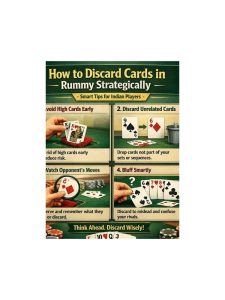
Rummy FAQ: Why Does a Good Draw Sometimes Make a Hand Worse?
A good draw is not always a good result. A card may complete a pair or open several possibilities, yet leave the rest of the hand crowded with high-value or incompatible cards. The draw increased one local feature but reduced the hand’s overall quality. This is why a hand should be evaluated after sorting, not by celebrating the newest card alone.
First check whether the draw creates a legal group or merely a hopeful fragment. Then count how many cards still lack a job. If that number increases because you kept the new card and broke a simpler arrangement, the apparent gain may be misleading. Also ask whether the card has a clear discard plan if the next draw does not help.
Commitment is another hidden cost. A card that fits one narrow route may make you ignore a safer route already present. This can happen with a high-value face card, a second copy of a useful rank, or a connector that looks elegant but needs two precise cards. Potential is valuable only when you can afford to wait for it.
Timing matters. Early in a round, you may be able to test a promising idea. Late in a round, the same card may be too expensive to carry. The score and format also matter: reducing penalty may be more important than seeking a perfect arrangement. Keep the decision tied to the current situation rather than to a general rule about good cards.
When a draw creates confusion, pause and re-sort from the beginning. Mark completed groups first, then practical partial groups, then isolated cards. This resets the evaluation and prevents the new card from receiving special treatment simply because it arrived last. A good draw should improve the hand’s structure, not just its most interesting corner. There is also a social reason to reset the hand after a good draw. Describing the complete structure to yourself prevents a lucky-looking card from taking over your attention. If the result is still worse overall, accept that the draw changed the problem rather than insisting it must be helpful. Clear evaluation is more useful than attaching a positive label to every favorable-looking card. The same principle applies when a draw completes one group but leaves a newly isolated high card. Celebrate the completed group only after checking the remainder. If the hand’s total exposure rose, the draw may have solved one section while creating a new priority. This whole-hand check is quick and prevents local improvement from becoming false confidence.