Rummy FAQ: What Is a Useful Waiting Move?
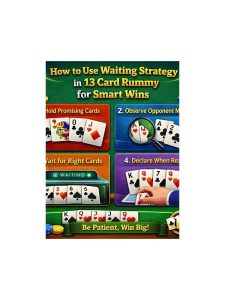
A useful waiting move is a legal draw or discard that does not force you to commit to one narrow plan too early. It is not passive play. The move should preserve flexibility, reduce risk, or improve your information for the next turn. In a changing hand, waiting can be more valuable than making a visible but fragile improvement.
How can you recognize one? First, list the routes your current cards support. A waiting move should leave at least two credible routes alive, unless the rules or score make a direct finish clearly preferable. Second, check the card’s cost if neither route develops. If the card becomes difficult to release later, the move may only look flexible while creating a hidden liability.
Is a low-value card always a good waiting card? No. Point value is only one measure. A low card may be the only connector for a promising sequence, while a high card may be harmless if it has several exits. Consider connection count, likely future uses, and how much information the discard reveals.
Can taking from the discard pile be a waiting move? Sometimes. A discard can be useful when it joins more than one possible structure or gives you a safe way to postpone a commitment. However, taking it may also reveal what you are building. Compare the information cost with the flexibility gained. A hidden draw is not automatically better, and a visible draw is not automatically worse.
What if the table is moving quickly? Use a compact test. Ask whether the move improves your current hand, preserves a fallback, and avoids creating a large release problem. If it passes two of the three tests and the format permits it, it may be a reasonable wait. Do not let the label become an excuse for indecision.
When should you stop waiting? Stop when one route has clearly better evidence, when your remaining work becomes urgent, or when holding alternatives prevents you from building a valid structure. Waiting has an expiry point. A card that was flexible three turns ago may become expensive as other cards disappear.
The best waiting moves are easy to explain after the hand. You should be able to say what they preserved and what information you expected next. If you cannot name either, the move was probably merely comfortable. Review these decisions separately from wins and losses so you can learn whether your patience was purposeful.
Waiting also has a social dimension. Keep the move within the stated turn time and avoid using hesitation to pressure others. A useful pause is quiet preparation, not a performance. When the decision is ready, act clearly and let the next turn provide the information you planned to observe.