
Rummy Guide: Read Your Hand From the End Backward
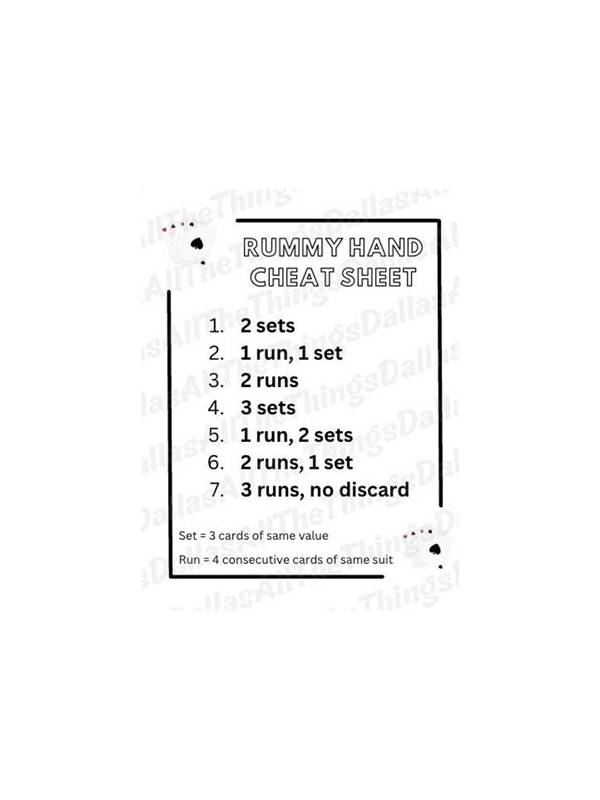
When a rummy hand feels crowded, start at the end. Instead of asking which card to draw next, ask what a valid final arrangement must contain under the current rules. Working backward turns a collection of cards into a list of requirements.
Write down the mandatory structures first. Some variants require a pure sequence, a second sequence, or a minimum number of groups. Confirm the exact rules before using this method because requirements differ. Then mark any group already complete. Completed groups reduce the number of remaining problems and should usually be protected.
Next, identify the hardest requirement. A pure sequence with no joker may be more restrictive than a flexible set, for example. Examine the cards that could contribute to it and count the missing links. If the route needs a single specific card, label it narrow. If several unseen cards could help, label it open. This ranking helps you allocate attention.
Keep the backward review separate from wishful thinking. A route is not complete because its cards look close in rank or share a suit. Check the exact order and the exact grouping rule. If a card can serve two routes, mark that conflict openly. You may then choose to preserve it for flexibility or commit it where it satisfies the harder requirement.
Only after checking the hardest requirement should you evaluate secondary groups. Two attractive pairs can distract you from a missing mandatory sequence. A backward review keeps the end condition visible and prevents you from building a hand that looks organized but cannot be declared.
Use the method again after every meaningful draw. A new card may complete a requirement, make another route unnecessary, or create a better bridge. Do not automatically add the new card to the most obvious group. Ask whether it improves the final arrangement more than the card it would replace.
This approach is especially useful in practice sessions. Lay out a sample hand, state the final requirements, and describe two possible paths to satisfy them. Then choose a discard while explaining which requirement remains protected. The goal is not to calculate every possibility. It is to make each decision answerable in terms of the final legal hand.
Once the hand is described backward, return to the present turn. Choose only the next action, then update the summary. This keeps the method practical and prevents a long imagined sequence from becoming a new source of overconfidence.


