Rummy How-To: Practice Counting Visible Rank Pressure
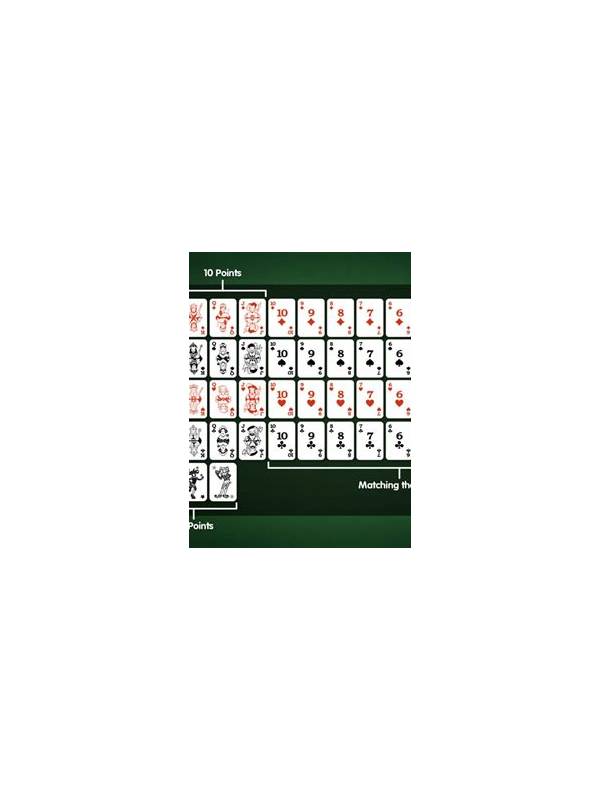
When you need one rank to complete a group, the visible discard pile contains useful information. You do not need to memorize the entire deck. Simply notice how many copies of the relevant rank and nearby ranks have already appeared. This practice is called visible rank pressure because the remaining options become more constrained as cards leave view.
Choose one target at a time. If a pair is waiting for a seven, count the sevens you can see in the discard history and open hands, if the format displays them. Do not assume the unseen cards are evenly distributed; you are only recording evidence. If several sevens are visible, the pair may deserve less protection than a connection with more possible completions.
Nearby ranks matter for sequences. A five can often use a four or six, while a ten may have two directions depending on the rules. Write down the exact legal completions instead of relying on a vague idea that the card is “close.” A legal route with two visible missing ranks may be stronger than a route with one exact rank that is already heavily exposed.
Use the count to compare, not to predict certainty. Cards can still arrive after several copies have appeared, and a low count does not guarantee a draw. The information changes the relative attractiveness of your holdings. Combine it with point cost, pure-sequence requirements, and the plans opponents may be showing through their discards.
Practice away from live pressure with a small stack or a recorded hand. Pause after each turn and name one target, the visible copies, and the alternative you would keep if the target became less likely. Stop counting when it stops improving a decision. The aim is not to perform arithmetic for its own sake; it is to make hidden assumptions visible.
In a real hand, a simple note such as “two of four visible” may be enough. If the number changes the comparison, use it. If it does not, return attention to structure and discard safety. Good counting supports judgment; it should not replace it.
If the interface does not show a reliable discard history, do not invent precision. Count only what you personally observed and label the rest as unknown. A rough count can still improve a comparison, while false accuracy can make a weak route look mathematically secure. The skill is disciplined attention to visible evidence, not memorizing every card in every hand.