Rummy Strategy: Compare a Safe Group With a Promising Group
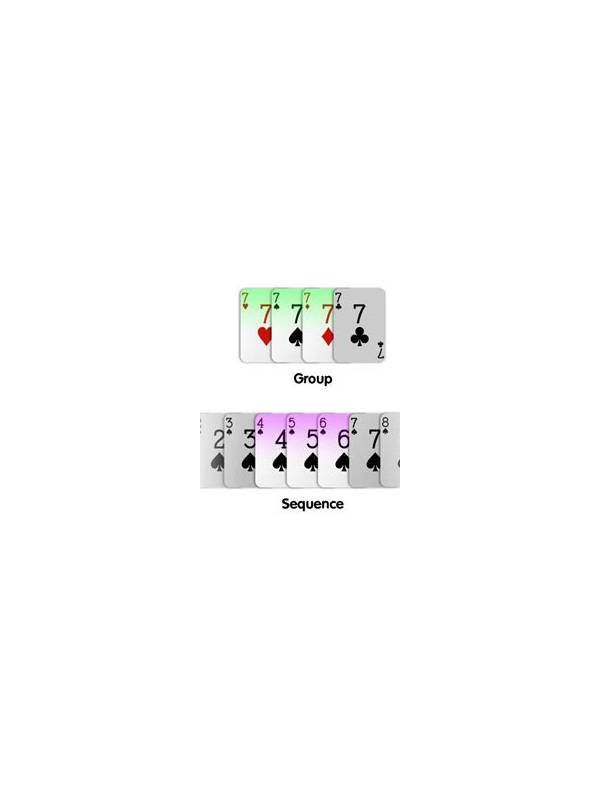
Rummy hands often contain a safe group and a promising group. The safe group already meets a meaningful part of the rules. The promising group could become strong but still needs cards. Choosing how to treat them requires more than asking which one looks more interesting.
Describe the safe group precisely. Is it already a valid sequence or set, or is it only a pair? A group that satisfies a rule deserves more protection than a pattern that merely resembles one. Check the variant’s requirements before assigning value. A completed pure sequence, for example, may be more important than a speculative set even if the set seems close.
Then describe the promising group’s missing pieces. Count the number of realistic improvements and whether one draw would complete it. A connected pair with two possible neighbors may be more promising than a scattered pair that needs a specific rank and suit. Avoid treating every theoretical combination as equally likely or equally useful.
Consider the cost of preserving both groups. Holding every possible card can leave you with high-value loose cards and too little room to adapt. If the safe group already protects a requirement, you may be able to discard a card from the promising group when it has a narrow route. If the safe group is not actually valid, protecting it may create false security.
Timing changes the comparison. Early in a hand, keeping one promising route can be reasonable while you gather information. Later, the safe group may deserve priority because fewer draws remain. Review the hand after each turn rather than defending the first plan you made.
Use a short decision question: “What does this card do now, and what exact improvement am I waiting for?” If the answer is vague, the card may be relying on hope. Keep the group that supports a legal structure and has a realistic path to improvement. Strategy is not about rejecting every risk; it is about making the risk visible before you accept it. Create practice pairs with similar-looking groups but different rule status. In one hand, the safe group should genuinely satisfy a requirement; in the other, it should only be promising. Explain why the priorities differ. This builds a useful habit: verify the foundation first, then decide how much speculation the remaining cards deserve. The same comparison can guide a discard. If preserving the promising group forces you to keep several unrelated cards, its apparent potential may be too expensive. If preserving the safe group leaves a simple route open, protect it and let new information decide the next step. Make the trade-off explicit before acting.