Rummy Tips: Use Suit Distribution to Find a Starting Plan

When a rummy hand opens with several unrelated cards, it can feel as though there is no plan. A useful first step is to look at suit distribution rather than individual card excitement. The number of cards in each suit does not predict the result, but it helps you organize possibilities without committing too early.
Separate the hand mentally into suits and note where you have neighboring ranks. A suit with three connected cards is an obvious candidate for a sequence. A suit with two cards that sit close together may be a secondary route. A lone high card in a suit with no nearby support is often less flexible, especially if it carries a large penalty under the relevant rules.
Avoid treating a crowded suit as automatically strong. Three cards of one suit can be useful if they connect, but three scattered ranks may be harder to arrange than a compact pair in another suit. Distribution is a starting filter, not a verdict. After counting suits, check rank distance and whether a joker can complete a legal group.
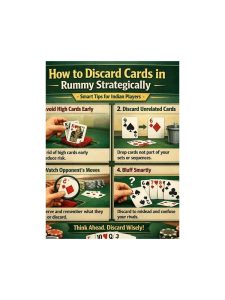
Use a three-part label for each card: connected, potentially connected, or isolated. Connected cards already belong to a promising run. Potentially connected cards need one of a small number of ranks. Isolated cards have no clear neighbor or set partner. This label makes the next discard decision clearer because you can compare flexibility instead of simply choosing the highest card.
Recheck the distribution after every meaningful draw. A new card can turn a secondary route into the main route, while a discarded card can remove the only bridge between two ranks. Do not rebuild the entire hand after every turn; just ask whether the balance of connected and isolated cards changed.
The goal is not to memorize suit counts. It is to create a calm opening routine: group by suit, identify connections, mark uncertainty, and protect the route with the most realistic completion path. This method keeps an attractive but disconnected collection from controlling your decisions.
For practice, describe the distribution in one sentence: “I have one connected route, one pair, and three isolated cards.” This forces you to notice the whole hand. As the hand develops, update the sentence rather than relying on a vague impression. A clear summary is useful when the layout is crowded or when a joker makes several arrangements appear possible at once.