Rummy FAQ: What Does a Good Fallback Plan Look Like?
A fallback plan is not an excuse to hold weak cards forever. It is a defined alternative you can use when your preferred route loses support. A good fallback is smaller than the main plan, uses cards you already own, and can be reached without requiring several unlikely draws. Its role is to reduce the damage of uncertainty.
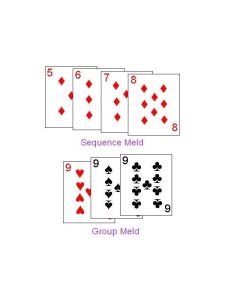
Start with a primary route and state its dependency. Perhaps it needs one missing connector, one rank group, or a particular card from the visible pile. Then ask what structure would remain if that dependency fails. The fallback might preserve one completed sequence while reorganizing the loose cards into a compact group. It should be concrete enough that you can name the next discard required to move toward it.
A strong fallback has three qualities. It improves the hand immediately or within one turn, it does not expose an unnecessarily useful card, and it leaves room to return to the main route if evidence changes. A fallback that requires abandoning all existing progress is usually another primary plan in disguise. Keep the options separate so you know what you are protecting.
Set a trigger for switching. The trigger could be a missed draw, the appearance of a competing card in an opponent’s discard pattern, or the loss of a flexible connector. Without a trigger, players often stay loyal to the original plan long after it has become expensive. With one, the switch becomes an ordinary decision rather than a reaction to disappointment.
Do not create too many fallbacks. One primary route and one fallback are usually enough. A third possibility may be recorded as a loose option, but it should not receive equal attention. Too many plans divide the hand and make every discard feel reversible when it is not.
Review the fallback after the hand. Did it protect real progress, or did it simply postpone a necessary discard? Did the trigger arrive early enough? A useful fallback will not rescue every round, but it will make missed draws less disruptive and your decisions easier to explain.
Fallbacks are also useful for emotional discipline. Knowing the next reasonable step reduces the temptation to chase an unlikely draw simply because the preferred route felt attractive a moment earlier.