Rummy Guide: Build a Discard Vocabulary
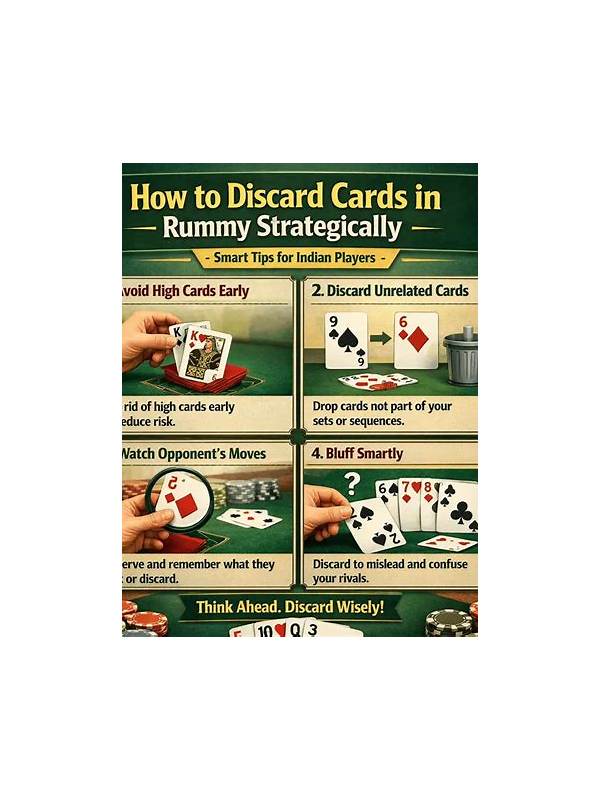
A discard is easier to evaluate when you can describe its role. Building a small discard vocabulary gives you useful labels without turning the game into a rigid formula. The labels should explain what a card is doing in your hand and what risk comes with releasing it.
Start with “orphan,” a card with no credible current route. Next is “passenger,” a card attached to a route but contributing little on its own. A “bridge” can support two structures, while a “cap” completes a useful group but may stop being valuable after the group changes. These terms are reminders, not verdicts.
Add a timing label. An early discard can be chosen for flexibility and information. A middle-turn discard may need to balance structure with opponent risk. A late discard should be checked against declaration legality and point exposure. The same orphan can be a simple release early and a dangerous delay near the end.
Before discarding, name the card in two ways: its hand role and its timing role. For example, “passenger, late” prompts a different check from “bridge, early.” Then ask what replacing it would achieve. If the replacement creates no better route, discarding may only rearrange uncertainty.
Review your vocabulary after a few hands. If a label is used for almost every card, it is too broad. If a label never changes a decision, remove it. The purpose is to shorten the path from observation to action while leaving room for context. Clear language can expose a weak attachment before that attachment costs a turn or a high-value penalty.
You can also use the vocabulary during review. Highlight the first moment when a passenger should have become an orphan, or when a bridge became a cap. This creates a timeline of the hand rather than a simple judgment about the final discard. Over several reviews, you may find that one category causes most of your hesitation.
Keep the vocabulary personal and small. A dozen impressive labels are less useful than four terms you can recall under pressure. The goal is clarity, not showing that you know specialist language.
Use labels only when they change what you inspect next. Otherwise, ordinary language is enough.
For example, calling a card a “passenger” should prompt you to ask whether its route has another extension. If it does not, the label has helped you reach a discard decision.
Over time, these labels can reveal where your analysis slows down. Practice that category in a few low-pressure hands, then simplify the label if it becomes a source of extra thought.