Rummy Guide: Use a Route Scorecard Without Faking Precision
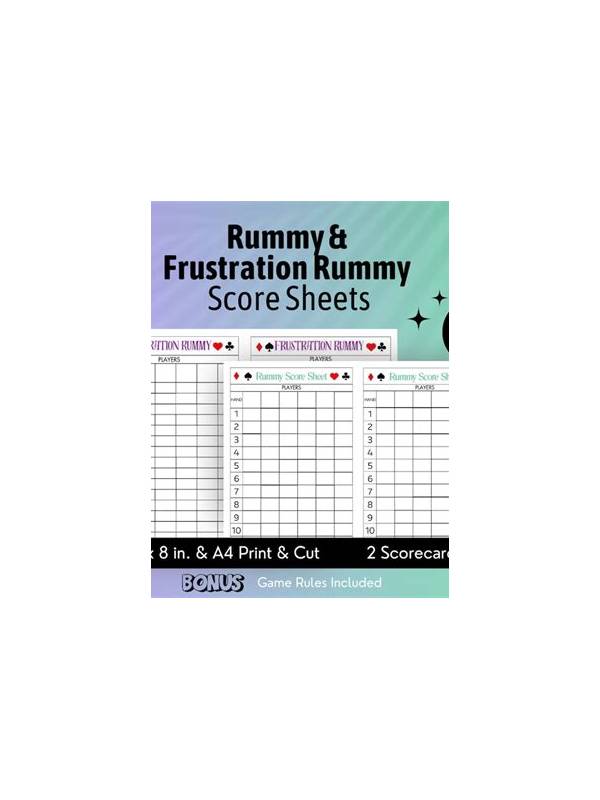
Players often want one number that says which rummy route is best. Exact probability can be difficult when the full deck, discarded cards, and other hands are not known. A qualitative scorecard can still help, provided it is used to compare evidence rather than to pretend uncertainty has disappeared.
Give each route three labels: progress, breadth, and requirement. Progress describes how close the route is to completion. Breadth describes how many realistic cards can improve it. Requirement describes whether it helps satisfy a necessary rule, such as a pure sequence. Use words such as low, medium, and high instead of invented percentages.
For example, a route may have high progress because two cards already fit, medium breadth because several ranks could help, and low requirement because it does not address the hand’s essential missing structure. Another route may have lower progress but high requirement. The labels make the trade-off visible without claiming that one route has a precise chance of winning.
Add a fourth label for cost. Cost includes holding high points, blocking another route, or needing several turns. A route that looks attractive on progress alone may be poor when its cost is high. Review the scorecard after each important draw rather than carrying yesterday’s labels forward.
Avoid double-counting. If breadth is high only because several cards overlap in the same narrow plan, do not treat each possibility as independent evidence. Record the route in plain language and list its distinct improvements. Also separate cards you have seen from cards you merely expect to exist; that distinction is more valuable than a decorative score.
The scorecard should lead to an action. Choose whether to protect the route, hold it for one review point, or release it. If the labels are tied, use a practical tiebreaker: which choice leaves the hand easier to check and less costly if no improvement arrives? A clear tiebreaker prevents the tool from becoming another source of hesitation.
After practice, compare the scorecard with the hand review. Were your labels consistent? Did you overvalue routes that were easy to describe? Did requirement matter enough? The point is calibration, not perfect forecasting. Honest qualitative notes can support better decisions than precise-looking numbers built on guesses.
Define each label before a session. For instance, “high breadth” might mean at least three distinct improving cards, while “high requirement” might mean the route addresses a rule-critical gap. Consistent definitions let you compare reviews honestly. They do not create certainty, but they reduce the effect of mood and hindsight.